
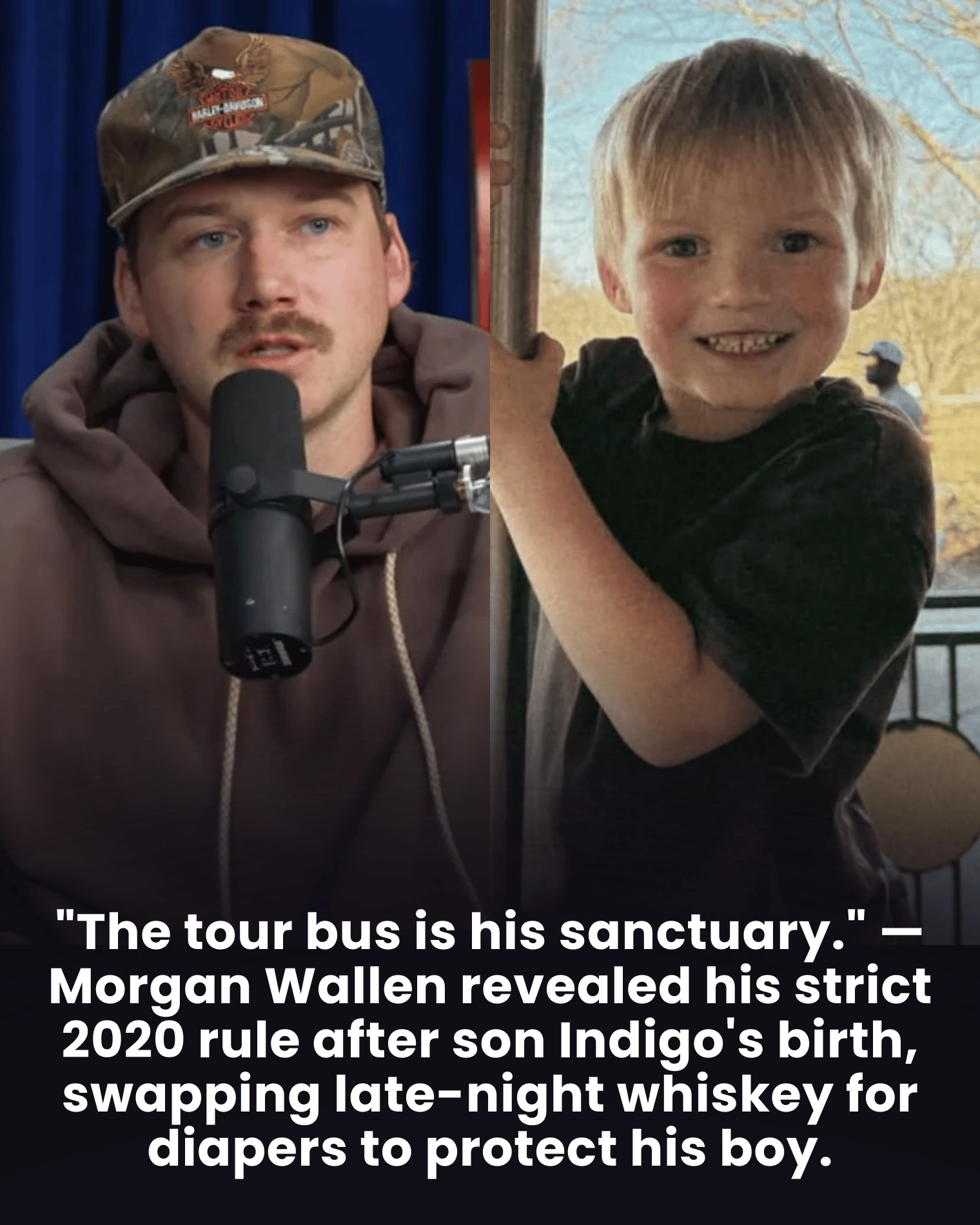
When Morgan Wallen welcomed his son, Indigo Wilder Wallen, on July 10, 2020, the moment marked more than the birth of a child. It signaled a reckoning. Known at the time as much for his chart-topping hits as for his hard-living tour persona, Wallen suddenly found himself staring at a responsibility that could not be postponed or managed by a team.
For years, the road had followed a familiar rhythm: late-night celebrations, crowded buses, music blaring long after the encore ended. The country star's rapid rise had come with the culture that often surrounds young fame — excess, adrenaline, and little sleep. But fatherhood disrupted that momentum in the most personal way possible.
Despite his split from Indigo's mother, KT Smith, Wallen made it clear to those around him that he intended to be present. Not symbolically. Not occasionally. Present.
The shift was not subtle. According to members of his inner circle, Wallen established a strict, non-negotiable rule for his tour bus whenever Indigo was visiting. The environment would change completely. Alcohol was removed. The rowdy after-parties were relocated elsewhere. Friends and crew were expected to respect a quieter, more structured atmosphere.
What had once been a rolling celebration became, in his words, a sanctuary.
Diaper bags replaced whiskey bottles. Instead of bass thumping through the walls, there were lullabies and the soft hum of late-night cartoons. For an artist whose brand had often leaned into rebellious charm, the transformation felt almost jarring. But those close to him describe it as necessary.
Wallen has spoken publicly about wanting to become a "godly man," referencing the steady influence of his own father, Tommy. That aspiration carried weight. The birth of Indigo forced him to confront the difference between image and example. Headlines fade quickly; a child's memories do not.
The timing was significant. 2020 was already a year of upheaval, reflection, and forced stillness for much of the world. For Wallen, it became a mirror. The party-hard lifestyle that once felt like an extension of success began to look fragile under the responsibility of fatherhood. The question shifted from "What can I get away with?" to "What will my son see?"
Industry observers often frame celebrity reinventions as calculated brand strategy. But those within Wallen's camp insist this pivot was personal before it was public. The no-nonsense bus policy was not about optics. It was about boundaries — drawing a line between the chaos of fame and the stability he wanted his son to associate with him.
The phrase "the tour bus is his sanctuary" carries layered meaning. It acknowledges that life on the road is unavoidable for a touring artist. Yet it also suggests that sanctuary is not about location; it is about intention. By redefining that space, Wallen symbolically reclaimed control over his environment.
Fatherhood did not erase his past, nor did it instantly shield him from future missteps. Growth is rarely linear. But insiders maintain that Indigo's arrival interrupted patterns that might have spiraled further. The presence of a child has a way of narrowing priorities with startling clarity.
For Morgan Wallen, the transformation was not about abandoning music or ambition. It was about ensuring that when his son looks back years from now, he remembers a father who showed up — not just a performer who made noise.
In the end, swapping late-night whiskey for diapers may not make headlines as dramatic as a sold-out stadium. But it represents something more enduring: the conscious decision to be a parent first and a persona second.