
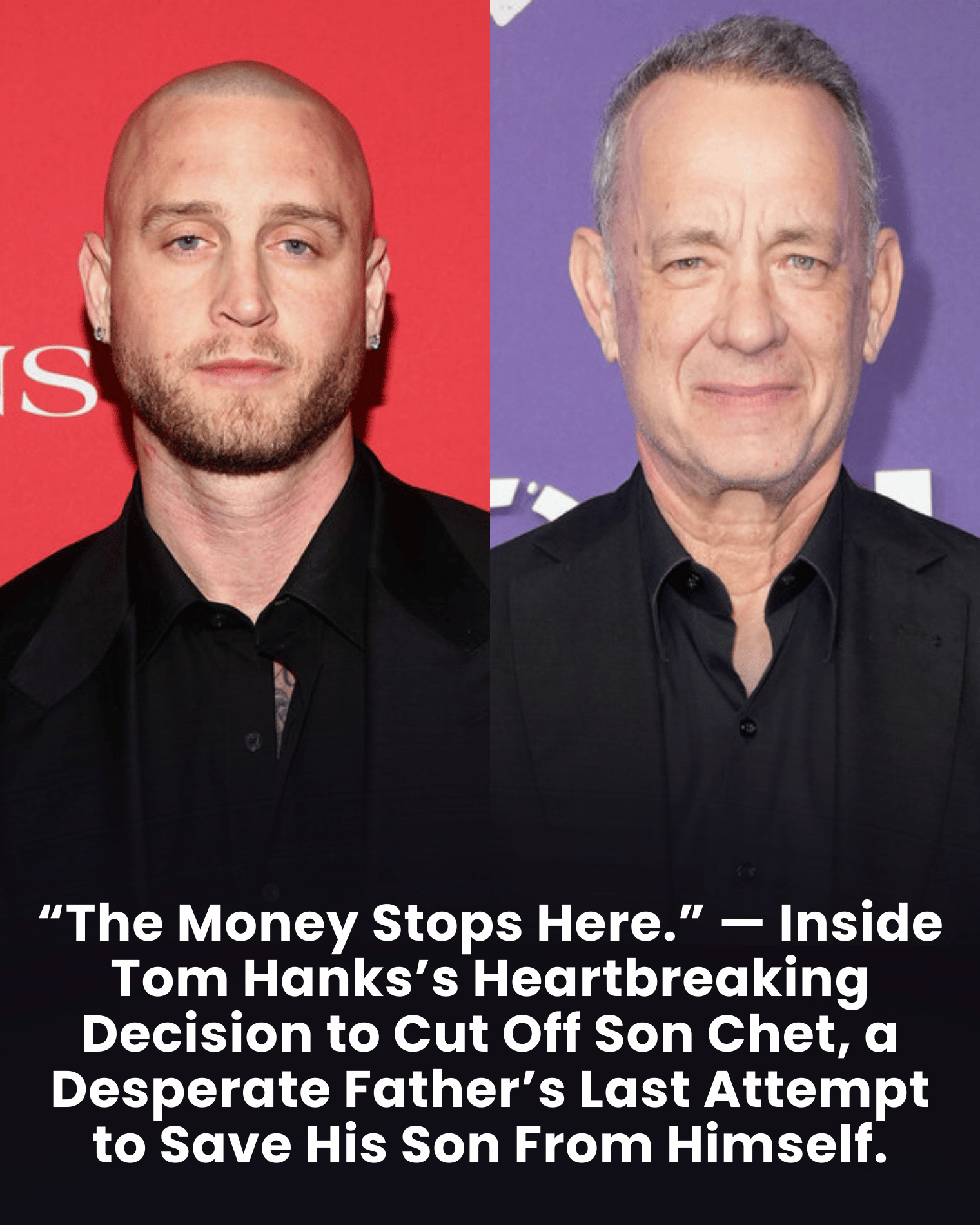
For decades, Tom Hanks has embodied decency on screen. Audiences know him as the steady hand, the moral compass, the reassuring presence in turbulent stories. Off screen, that reputation has followed him — Hollywood's perennial "nice guy." But fatherhood, he has learned, sometimes demands something harder than kindness. It demands resolve.
When it came to his son, Chet Hanks, the challenge was deeply personal and painfully public. Chet's struggles with addiction and erratic behavior played out in headlines and viral clips, far beyond the privacy most families rely on during crisis. For Tom and his wife, Rita Wilson, the experience was not a tabloid subplot. It was their son's life.
Behind closed doors, the couple faced a dilemma familiar to many parents navigating addiction: how to help without enabling. For years, they practiced what is often described as "tough love." It is a phrase that sounds simple but feels anything but when applied to your own child.
At some point, a line had to be drawn.
"The money stops here" was not a declaration of anger. It was an act of survival. Insiders close to the family have suggested that Tom and Rita eventually refused to bankroll Chet's lifestyle unless he sought legitimate treatment. The decision was not about punishment. It was about breaking a cycle that financial cushioning can unintentionally sustain.
Addiction rarely exists in isolation. It radiates outward, touching parents, siblings, spouses. In the Hanks household, the weight of watching a son spiral — while cameras documented every stumble — created a quiet strain. Tom, known for his warmth and humor, reportedly retreated at times into his study, choosing silence over spectacle. He would not perform anguish for the media. He would not let the world consume the family's pain as entertainment.
To the public, Tom Hanks remained composed. At premieres and interviews, he was gracious as ever. But those close to him understood the toll. Loving someone battling addiction means existing in a constant tension between hope and fear. Every phone call can carry dread. Every silence can feel ominous.
Tough love is often misunderstood as coldness. In reality, it can be one of the most excruciating forms of care. Cutting off financial support does not sever love; it attempts to remove the safety net that softens consequences. For Tom and Rita, it was a last attempt to push their son toward accountability and recovery.
Chet has since spoken openly about his sobriety journey, acknowledging dark chapters and moments of reckoning. Recovery, like addiction, is rarely linear. But the boundary his parents enforced became part of that turning point.
For Tom Hanks, the experience revealed a dimension of fatherhood far removed from scripted heroism. There are no rehearsals for these moments. No guarantee that the decision you make will yield the outcome you pray for. Only the quiet hope that drawing a line today might save a life tomorrow.
The world may see the affable icon, the embodiment of cinematic kindness. But within his own home, Tom Hanks had to summon something sterner — a steel will forged not from pride, but from love. Because sometimes the hardest role a parent plays is not protector or provider.
It is boundary-setter.
And sometimes, love sounds like three unyielding words: the money stops.