
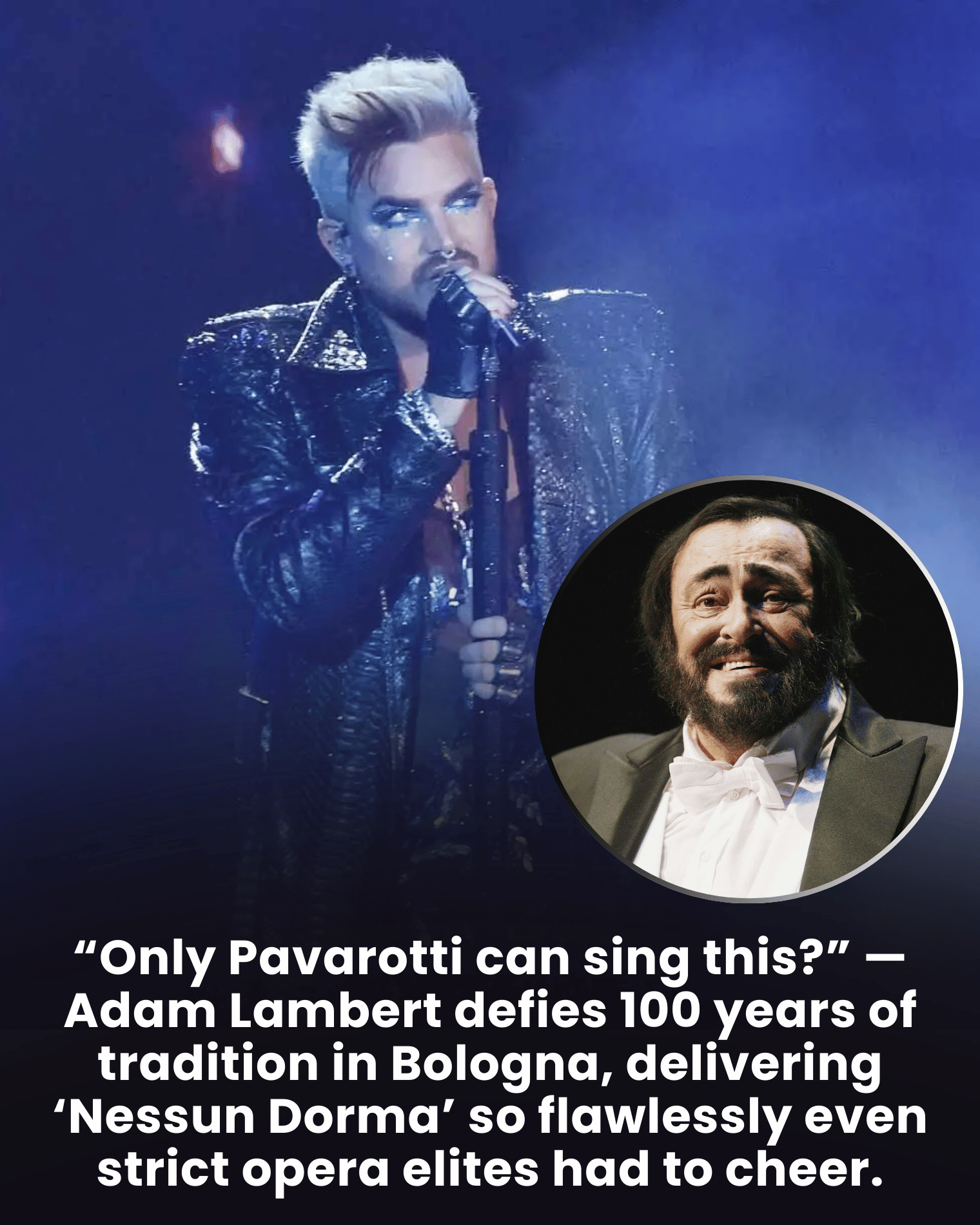
For more than a century, "Nessun Dorma" has stood as one of the most intimidating pieces in the entire operatic repertoire. The aria from Turandot has been immortalized by legendary tenors, most famously Luciano Pavarotti, whose soaring interpretation turned the climactic "Vincerò!" into a defining moment of classical performance.
So when Adam Lambert stepped onto a stage in Bologna and announced he would sing the aria, the reaction from many in the audience was cautious at best.
Bologna sits at the cultural heart of Italian classical music, and its audiences are famously discerning. Many opera traditionalists regard "Nessun Dorma" almost as sacred ground—an aria that typically demands years of classical training, disciplined technique, and the vocal endurance required of elite operatic tenors.
Lambert, best known for his rock performances with Queen, knew exactly what he was walking into.
At first, the atmosphere in the hall reflected that skepticism. Observers noted arms folded and cautious expressions among audience members, particularly among older opera enthusiasts who had come expecting a pop singer attempting something far outside his lane.
Then the music began.
Rather than overplaying the drama, Lambert approached the aria with surprising restraint. He allowed the melody to unfold gradually, shaping the phrases with controlled breath and careful dynamics. The performance built steadily, each line climbing higher as the orchestra swelled beneath him.
By the time the final section arrived, the mood in the room had shifted.
When Lambert reached the climactic final note—the famous sustained "Vincerò"—he held it with remarkable strength and clarity. The sound filled the hall with a resonance that even seasoned opera listeners could not ignore.
For a moment, the room was silent.
Then the applause erupted.
Some of the most striking reactions reportedly came from the front rows, where seasoned opera critics and long-time patrons rose to their feet in an unexpected standing ovation. The skepticism that had hung in the air at the beginning of the performance seemed to dissolve in seconds.
Backstage, Brian May—Lambert's bandmate in Queen—watched the moment unfold with visible astonishment. Later, he admitted that hearing Lambert conquer such an iconic aria felt like a turning point.
For May, it was the moment when Lambert stopped being seen as merely the singer filling Freddie Mercury's place in Queen's touring lineup and instead emerged as a singular artist in his own right.
"Nessun Dorma" has challenged singers for generations. Many approach it with reverence; few attempt to reinvent it.
But on that night in Bologna, Adam Lambert proved that extraordinary vocal power can transcend musical boundaries. What began as a daring gamble ended as a moment of unexpected unity—opera traditionalists and rock fans applauding the same breathtaking note.