
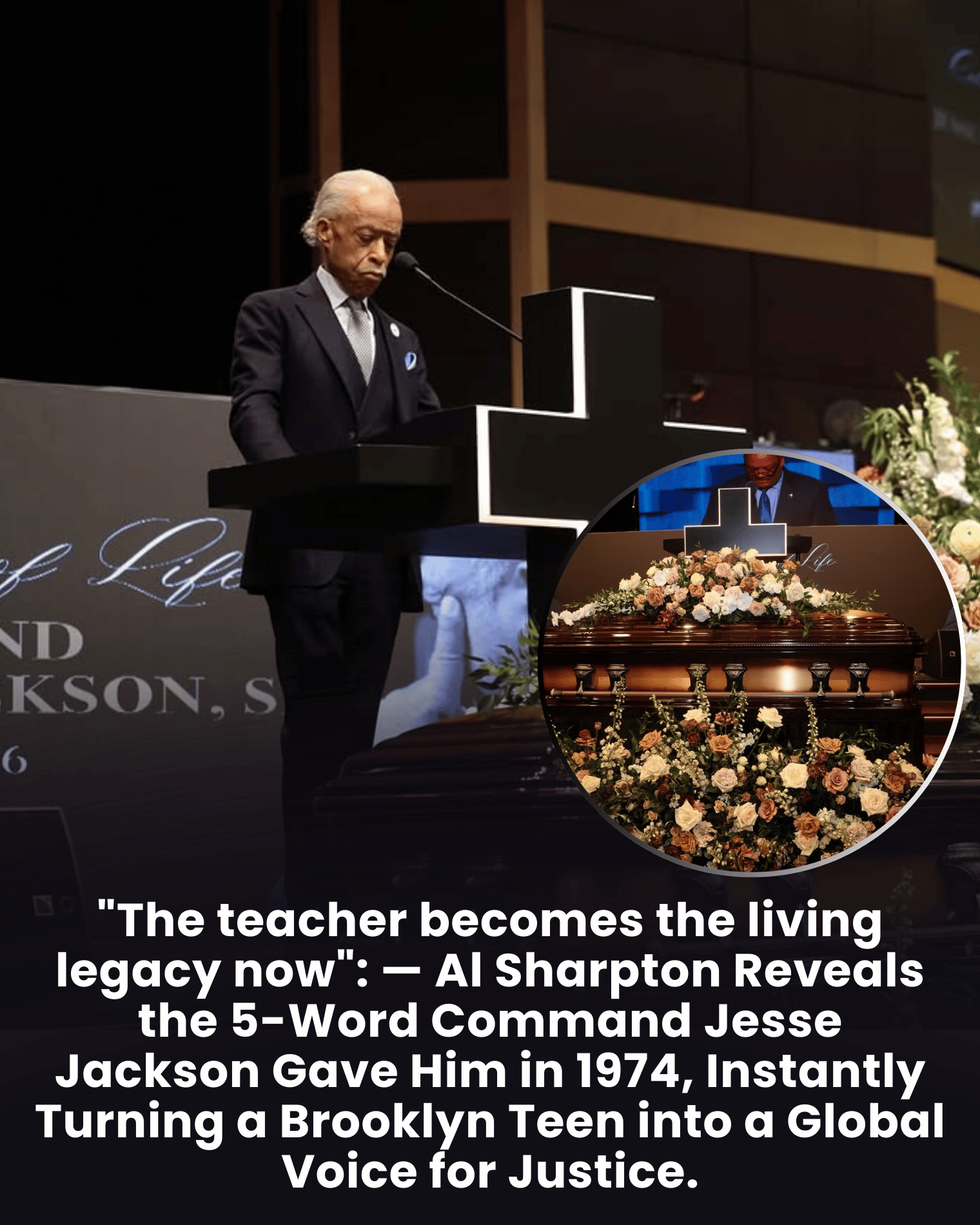
In the long history of the American civil rights movement, many defining moments occur not on grand stages or during massive demonstrations, but in quiet conversations that change the direction of a single life. One such moment, Rev. Al Sharpton revealed, happened in 1974 when he was still a teenager in Brooklyn. At the time, he was a young activist eager to contribute but uncertain about his role in the growing movement for racial justice. What happened next would shape not only his future but also the trajectory of activism in the decades that followed.
Sharpton recalled that his early involvement with Operation PUSH introduced him to Rev. Jesse Jackson, who had already become one of the most influential voices continuing the legacy of the civil rights movement after Dr. Martin Luther King Jr. Sharpton was still very young, surrounded by experienced organizers and veteran leaders who had already spent years in the struggle. He described feeling both inspired and intimidated as he watched Jackson lead rallies, negotiate with corporations, and mobilize communities across the country.
During one particular moment, Jackson reportedly looked directly at the teenage Sharpton and delivered a simple but life-altering message: "The movement needs your voice." The statement contained only five words, yet Sharpton would later describe it as a command that carried the weight of responsibility and possibility. It was not merely encouragement. It was a declaration that he had a role to play in a much larger fight for justice.
According to Sharpton, that moment marked the beginning of what he calls a "transfer of fire." Jackson did not simply offer praise or symbolic support. Instead, he began actively mentoring the young activist. Sharpton traveled with him, observing how Jackson handled negotiations with major corporations, organized boycotts, and addressed massive crowds during marches. These lessons were not taught in classrooms but in real-life situations where every word and decision carried consequences.
Jackson's mentorship also involved teaching Sharpton how to remain firm when facing opposition. Civil rights activism during that period often meant confronting hostile environments, political resistance, and intense public scrutiny. Sharpton said Jackson demonstrated how to maintain discipline, keep the focus on justice, and transform conflict into opportunity for dialogue and progress.
Over time, the teenager from Brooklyn developed into one of the most recognizable figures in modern civil rights advocacy. Sharpton's leadership in protests, political commentary, and national conversations about equality would eventually reach global audiences. Yet he often traces the roots of his confidence back to that early moment when a seasoned leader decided to place trust in a young voice.
Sharpton now reflects on the moment with a sense of profound gratitude and responsibility. In his words, the teacher eventually becomes the living legacy. The mentorship he received from Jesse Jackson did not end with lessons about organizing or speaking. It created a chain of influence that continues as new generations of activists look for guidance and inspiration.
The story demonstrates how a single act of faith can echo across decades. Jackson's decision to encourage a teenager did more than shape one career—it helped cultivate a leader who would continue the work of justice on a global stage. In that sense, the "transfer of fire" Sharpton describes remains one of the most powerful examples of how movements endure through mentorship, courage, and belief in the voices of the next generation.