
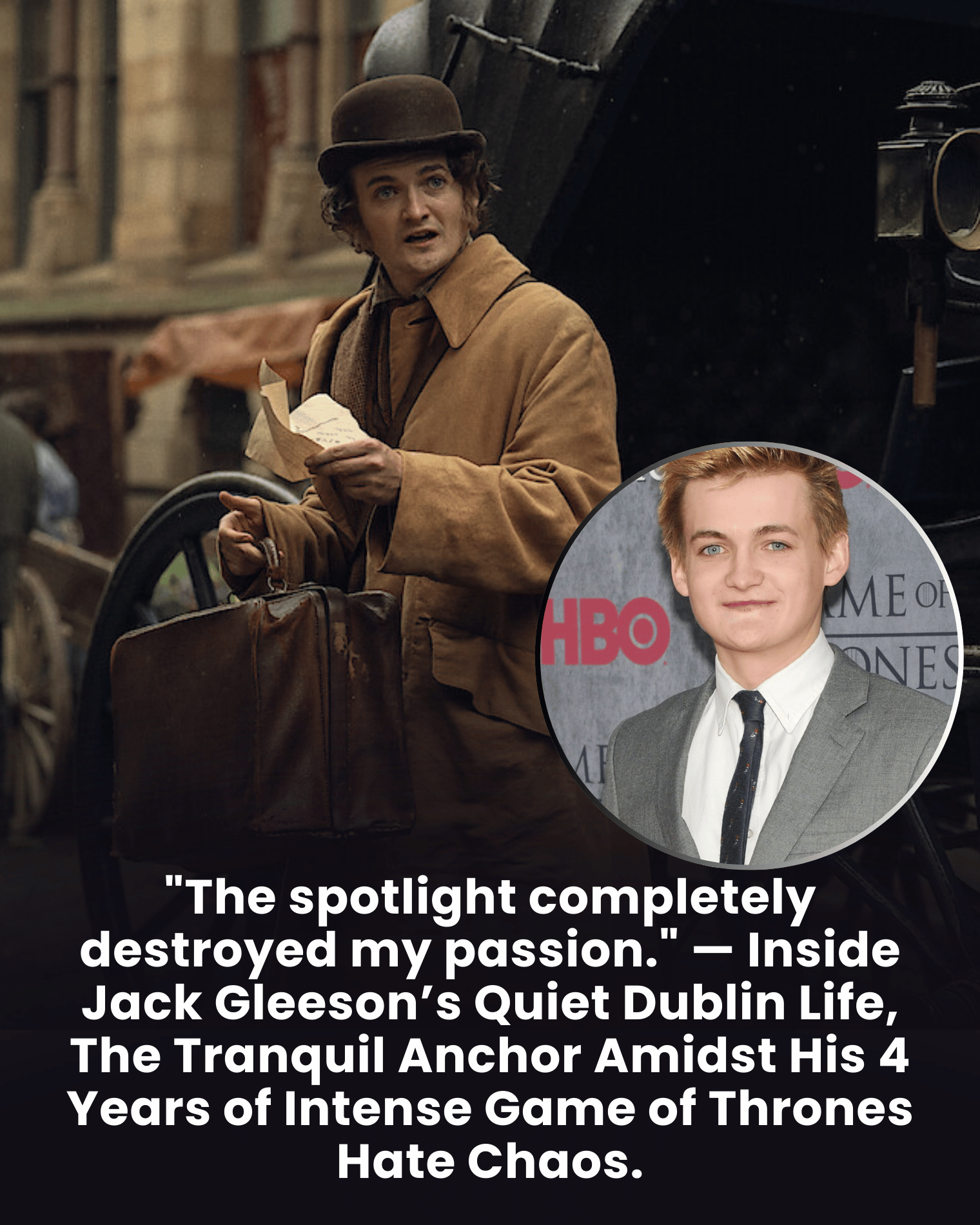
For millions of television viewers around the world, Jack Gleeson will forever be remembered as one of the most hated characters in modern television history. His chilling portrayal of the cruel and sadistic King Joffrey Baratheon in Game of Thrones was so convincing that it blurred the line between performance and reality for countless fans. Ironically, the very brilliance of that performance helped push the young actor away from the Hollywood spotlight entirely.
When Gleeson joined the cast of HBO's global phenomenon Game of Thrones, he was still a teenager with a promising career ahead of him. As Joffrey, the spoiled and tyrannical ruler whose cruelty shocked audiences week after week, Gleeson delivered a performance that critics frequently praised as one of the most compelling villain portrayals on television. His ability to embody the character's arrogance, sadism, and unpredictability turned Joffrey into a central figure in the show's early seasons.
However, the role came with an unexpected cost. Because Joffrey became one of the most despised characters on television, many viewers struggled to separate the fictional villain from the young actor who portrayed him. Gleeson often found himself the target of intense hostility from fans who projected their hatred of the character onto him personally.
Although many fans respected his performance, the sheer scale of global attention surrounding the show created an atmosphere that became increasingly uncomfortable for the actor. Interviews later revealed that Gleeson never truly desired the typical Hollywood lifestyle. The relentless publicity, expectations, and culture surrounding major television fame began to drain his enthusiasm for acting.
By the time Joffrey met his dramatic end during the infamous "Purple Wedding" episode in 2014, Gleeson had already made a surprising decision. At only 21 years old—an age when most actors would be chasing bigger roles and higher salaries—he announced that he would step away from screen acting indefinitely.
The reason was not scandal, burnout, or controversy. Instead, Gleeson explained that the profession had simply stopped feeling enjoyable. What once began as a childhood passion had, in his words, started to feel like a job shaped by industry pressure rather than creative joy.
Rather than move to Los Angeles or pursue blockbuster opportunities, Gleeson returned home to Dublin. There, he enrolled at Trinity College Dublin, one of Ireland's most prestigious universities, where he studied theology and philosophy. The academic path reflected his deeper interests in ethics, meaning, and human behavior—topics far removed from the chaos of celebrity culture.
Away from the glare of Hollywood cameras, Gleeson also returned to a quieter form of performance: small-scale theater. He became involved with independent productions and experimental stage projects, performing for intimate audiences rather than millions of viewers worldwide.
Friends and collaborators have often described his life in Dublin as intentionally simple. Instead of navigating celebrity parties and blockbuster contracts, Gleeson embraced an environment focused on study, creativity, and community. The decision allowed him to reclaim the artistic passion that had originally drawn him to acting as a child.
In recent years, Gleeson has occasionally returned to acting projects, proving that his departure was never about abandoning the craft entirely. Instead, it was about reshaping his relationship with it—choosing meaningful work over fame.
His story remains one of the most unusual outcomes of Game of Thrones. While many cast members leveraged the show's success into major Hollywood careers, Jack Gleeson chose a different path altogether. By stepping away from the machine of global stardom, he found something far rarer than fame: a life defined by balance, privacy, and genuine creative freedom.