
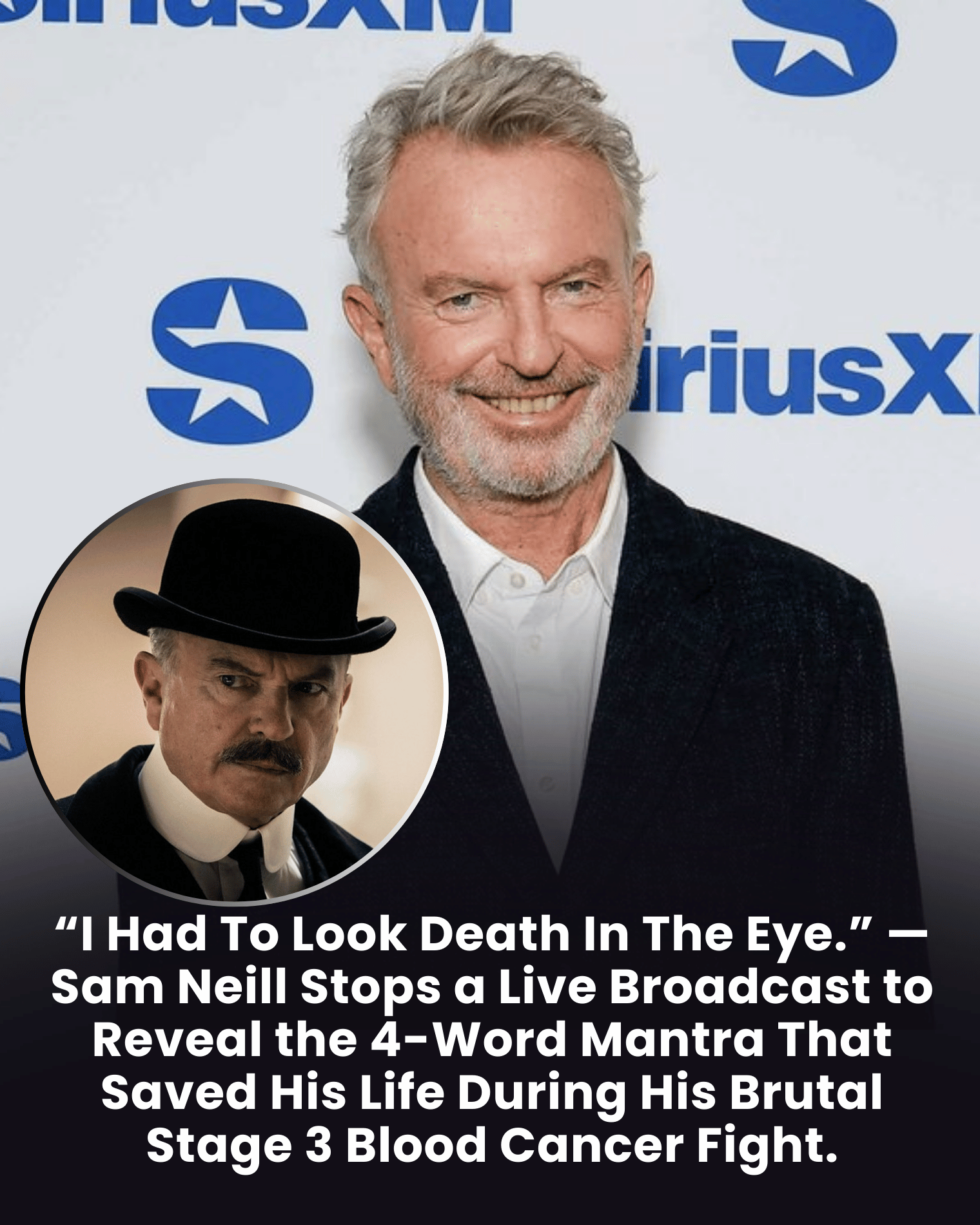
Sam Neill has never been the kind of performer who hides behind mythology, and that honesty is exactly what made his cancer revelation so powerful. When the beloved actor opened up about his battle with stage 3 angioimmunoblastic T-cell lymphoma, the world did not just see a screen legend from Jurassic Park or Peaky Blinders. It saw a man confronting mortality with rare clarity, dry humor, and astonishing emotional strength. In interview after interview, Neill spoke with the kind of calm that only comes from truly having looked death in the eye. His words carried extra weight because they were not polished for drama. They felt lived in, earned, and deeply human. His diagnosis and treatment were widely reported in 2023, and he later described the chemotherapy as "pretty brutal" while also saying the disease is in remission and that writing helped him through it.
What struck so many people was not only the seriousness of the illness, but the mindset Neill brought to it. He revealed that when his body was under siege and the future felt uncertain, he clung to a simple mantra that gave him a way to keep moving forward. That stripped-down determination became the emotional center of his story. Rather than collapsing under fear, he narrowed life to its essentials: endure the pain, protect the spirit, and keep going. It matched the public image fans have long loved in him — intelligent, grounded, and quietly defiant. Even in the face of a rare and aggressive blood cancer, he refused to surrender either his wit or his sense of self. Reports on his memoir and interviews consistently emphasized that he wrote while in treatment because he did not know how much time he had and wanted to leave something meaningful behind.
That act of writing became far more than a literary exercise. It was survival. In his memoir, Did I Ever Tell You This?, Neill explained that putting words on the page gave shape to the chaos surrounding him. It offered purpose during endless medical appointments and physically draining treatment cycles. Instead of allowing illness to define him, he turned storytelling into resistance. He was not merely documenting decline; he was asserting presence. Every page became proof that he was still here, still observant, still funny, still capable of turning pain into connection. The memoir's opening lines were especially stark, making clear that he understood the gravity of what he was facing. Yet even there, his voice remained unmistakably Sam Neill: unsentimental, candid, and touched with gallows humor.
What makes Neill's story resonate so deeply is that he never tried to present himself as invincible. He admitted uncertainty. He admitted discomfort. He admitted that the treatment was harsh and life-altering. But he also showed that courage does not always look loud. Sometimes it is a patient showing up for another infusion. Sometimes it is choosing laughter in a hospital room. Sometimes it is deciding that even when death feels close, your story is not over yet. Neill's openness transformed a private medical nightmare into something unexpectedly generous. For countless viewers and readers, his message was unmistakable: fear may arrive, but it does not get the final word.