
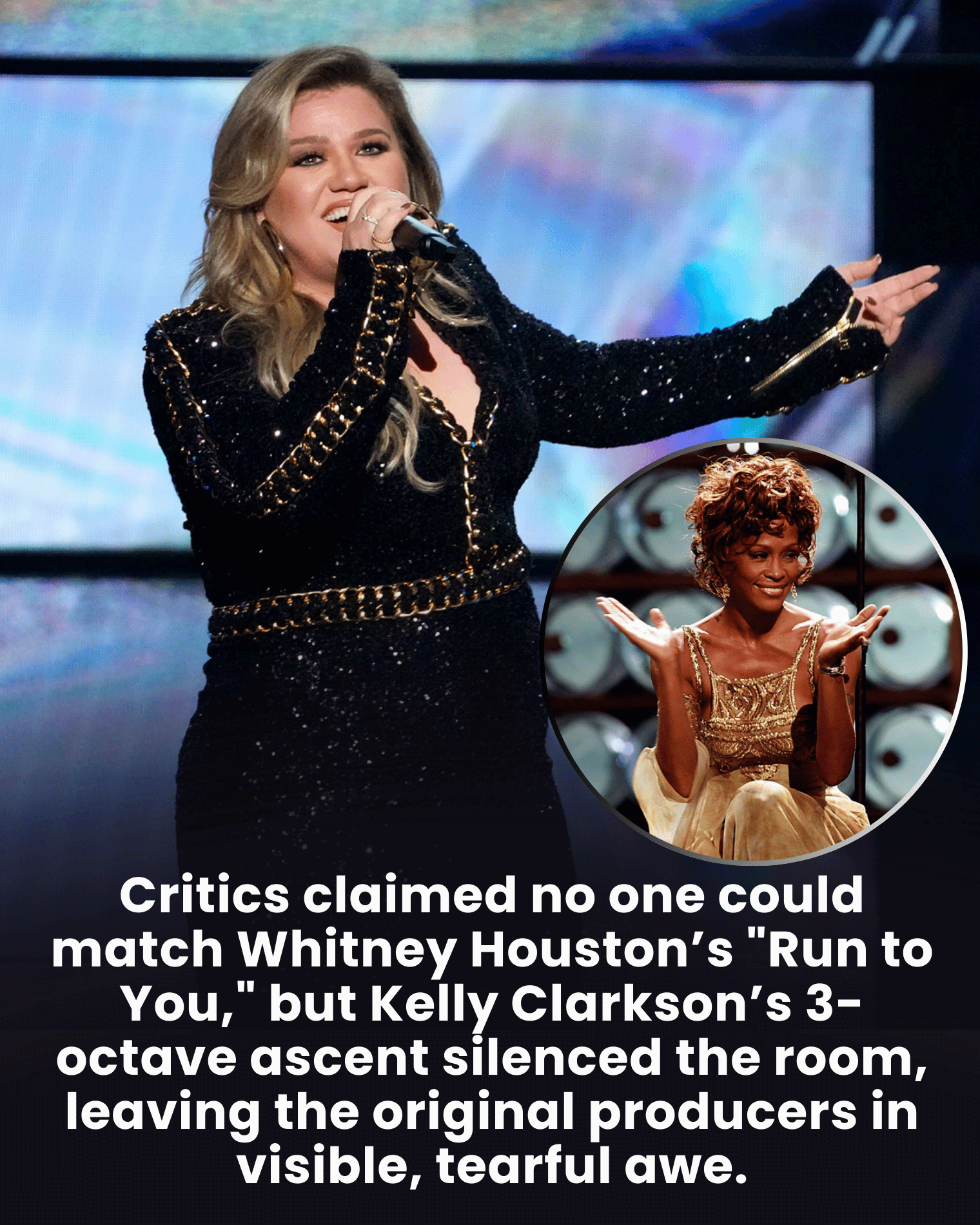
For decades, Whitney Houston's ballad "Run to You" has been regarded as one of the most untouchable songs in modern pop and R&B history. Originally released as part of the soundtrack for The Bodyguard in 1992, the song became a defining moment of Houston's vocal artistry. Its soaring melodies, emotional vulnerability, and technically demanding range made it a challenge even for the most accomplished singers. Many performers have attempted covers over the years, but few have managed to approach the song without inviting comparisons to Houston's legendary original.
That is why expectations were cautious when Kelly Clarkson stepped onto the stage during a special "Studio Sessions" tribute performance dedicated to iconic vocal classics. Known for her powerful voice and emotional delivery, Clarkson has built a career on reinterpreting songs with authenticity. Still, fans and critics alike understood that "Run to You" carried an almost sacred reputation.
From the moment the piano introduction began, the atmosphere in the room shifted. Instead of approaching the song with the dramatic intensity often associated with Houston's version, Clarkson chose restraint. Her first lines were delivered with quiet vulnerability, allowing the lyrics to breathe before the song's emotional weight began to unfold.
As the arrangement gradually built, Clarkson revealed the full power of her voice. Navigating the challenging range that moves from the rich tones around G#4 up to soaring notes approaching B6, she demonstrated the remarkable control that has defined her vocal career. Yet what made the performance extraordinary was not just technical ability. Clarkson infused the song with a sense of personal storytelling, as if each lyric had been drawn from her own experiences.
The audience responded with near silence throughout much of the performance, a sign of complete attention rather than hesitation. Every phrase felt deliberate, each note placed with careful emotional intention. By the time Clarkson reached the climactic final section, the room seemed suspended in anticipation.
Her final high notes carried both strength and fragility, echoing the emotional core that made the song famous in the first place. Then, instead of ending with a dramatic flourish, she brought the performance to a soft, whispered conclusion. The quiet ending created a powerful contrast to the vocal intensity that came before it.
In the front rows of the audience were several industry veterans who had been involved in the creation of the original recording. For them, the performance carried an additional layer of meaning. Witnesses described how some of those producers and musicians appeared visibly emotional as Clarkson finished the final line. When the room finally erupted into applause, many were seen standing almost in disbelief.
Within hours, clips of the performance began spreading across social media platforms. Fans praised Clarkson not only for her vocal skill but for her respectful interpretation of a song so closely associated with Whitney Houston. Rather than attempting to replicate Houston's legendary delivery, Clarkson approached the ballad as a tribute—honoring the original while revealing her own artistic voice.
Music critics quickly noted that the performance succeeded for a simple reason: Clarkson did not try to outshine Whitney Houston. Instead, she treated "Run to You" as a living piece of music, capable of carrying new emotion through a different voice.
The result was a rare moment in which a classic song felt both timeless and newly intimate. In that brief performance, Clarkson proved that while Whitney Houston's version will always remain iconic, the emotional power of the song can still resonate through artists who approach it with sincerity, respect, and their own truth.